Plants have a life cycle that alternates between a multicellular haploid organism and a multicellular diploid organism. A diploid multicellular organism is when the diploid stage of cell dominates the life cycle.

Alternation Of Generations Biology Encyclopedia Cells Plant Body Human Organisms C Alternation Of Generations Plants Worksheets Educational Worksheets
Green algae make cellulose and starch.

. Asked Jul 29 2018 in Biology Microbiology by xxxfireyangelxxx. The diploid plant is called a sporophyte because it produces haploid spores by meiosis. The diploid plant is called a sporophyte because it produces haploid spores by meiosis.
In plants the diploid multicellular organism is the A sporophyte. The haploid generation of a plant is called the sporophyte. Alteration of generation is known as metagenesis which can be seen in some plants and algae that have distinct haploid sexual and diploid asexual stages.
These life cycles are illustrated below with details about each life cycle provided in the captions. In some plants such as ferns both the haploid and diploid plant stages are free-living. In some plants such as ferns both the haploid and diploid plant stages are free-living.
The diploid plant is called a sporophyte because it produces haploid spores by meiosis. Asked Apr 18 2021 in Biology. Somatic cells body cells excluding sex cells are diploid.
Plants have a life cycle that alternates between a multicellular haploid organism and a multicellular diploid organism. Alteration of generations means that the plant produces both haploid and diploid multicellular organism. This E-mail is already registered as a Premium Member with us.
What type of cells are diploid. One haploid and one diploid. Plants and some algae life cycles that are intermediate between diploid or haploid dominance The species alternate between diploid multicellular organisms called sporophytes and haploid multicellular organisms called gametophytes.
Humans like plant sporophytes are diploid and make haploid gametes by meiosis. Expert solutions for 201 In plants the diploid multicellular organism is the. A diploid cell replicates or reproduces through mitosisIt preserves its diploid.
The diploid plant is called a sporophyte because it produces haploid spores by meiosis. The diploid chromosome number is the number of chromosomes within a cells nucleus. Based on this description you know that the organism could be a brown alga a red alga a green alga or.
A plant sporophyte is diploid and it produces spores by meiosis. In plants the diploid multicellular organism is the. Is the disadvantafes to production of broad leaves.
In plants the diploid multicellular organism is the. Chapter 21 Homework - 1 In plants the diploid multicellular. In some plants such as ferns both the haploid and diploid plant stages are free-living.
To do this cells within an organism exchange cellular molecules including RNA. In a multicellular organism like an animal or a plant it is cell-to-cell communication that allows the trillions of cells in an organism to coordinate life-dependent activities. The spores develop into multicellular.
The multicellular diploid plant structure is called the sporophyte which produces spores through meiotic asexual division. The spores develop into multicellular. In a multicellular organism like an animal or a plant it is cell-to-cell communication that.
Non-flowering seed plants are classified as. Differentiates plants from green algae. 1n male or female _____ that can fuse to form diploid 2n _____ asked Oct 2 2015 in Biology Microbiology by 20PHO7.
In alternation of generations in all plants the multicellular haploid 1n organism is referred to as the. On a trip to the beach you find a multicellular organism whose cells have chloroplasts and cell walls. Plants have a life cycle that alternates between a multicellular haploid organism and a multicellular diploid organism.
The first cell after fertilization is the. In plants the diploid multicellular organisms is the. The multicellular haploid plant structure is called the gametophyte which is formed from the spore and give rise to the haploid gametes.
In some plants such as ferns both the haploid and diploid plant stages are free-living. In alternation of generations in all plants the multicellular haploid 1n organism is referred to as the. The spores develop into multicellular haploid plants called gametophytes because.
Plants have a life cycle that alternates between a multicellular haploid organism and a multicellular diploid organism. This preview shows page 1 - 2 out of 4 pages. In the haplontic life cycle which is typical of some algae and fungi the mature multicellular organism is haploid.
Plants have a life cycle that alternates between a multicellular haploid organism and a multicellular diploid organism. The spores develop into multicellular haploid. The spores develop into multicellular haploid plants that are called gametophytes.
Diploid is a cell or organism that has paired. This number is represented as 2nIt varies across organisms. Meiosis in certain cells within the sporophyte produces haploid spores which divide by mitosis to produce the.
Alternation of Generations Ex. In the alternation of generations life cycle which is typical of plants there are two mature multicellular organisms. The diploid plant is called a sporophyte because it produces haploid spores by meiosis.
The haploid generation of a plant is called the sporophyte. In some plants such as ferns both the haploid and diploid plant stages are free-living. Suppose that an unknown organism from an alien planet is observed and found to have a diploid state only following fertilization.
The diploid plant is called a sporophyte because it produces haploid spores by meiosis. Diploid cells have two sets of chromosomesHaploid cells have only one. Alternation of generations also known as metagenesis or heterogenesis is the predominant type of life cycle in plants and algaeIt consists of a multicellular haploid sexual phase the gametophyte which has a single set of chromosomes alternating with a multicellular diploid asexual phase the sporophyte which has two sets of chromosomes.
Meiosis in certain cells within the sporophyte produces haploid spores which divide by mitosis to produce the. In plants the _____ is diploid and multicellular.

Plant Life Cycles Advanced Ck 12 Foundation

Alt Of Gen Alternation Of Generations Life Cycles Textbook
Figure 20 1 Plants Have Haplodiplontic Life Cycles That Involve Mitotic Divisions Resulting In Multicellularity In Both The Hapl Life Cycles Life Generation
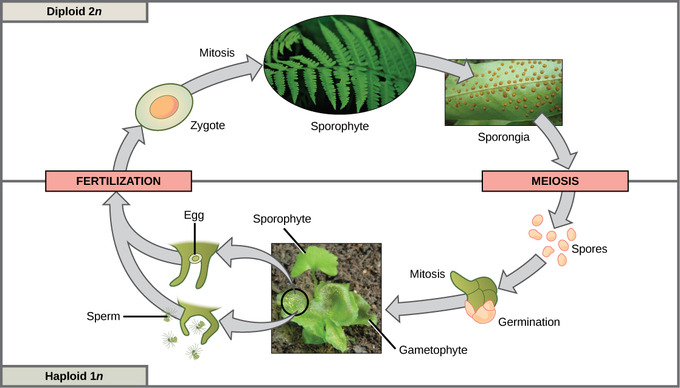
11 2b Life Cycles Of Sexually Reproducing Organisms Biology Libretexts


0 Comments